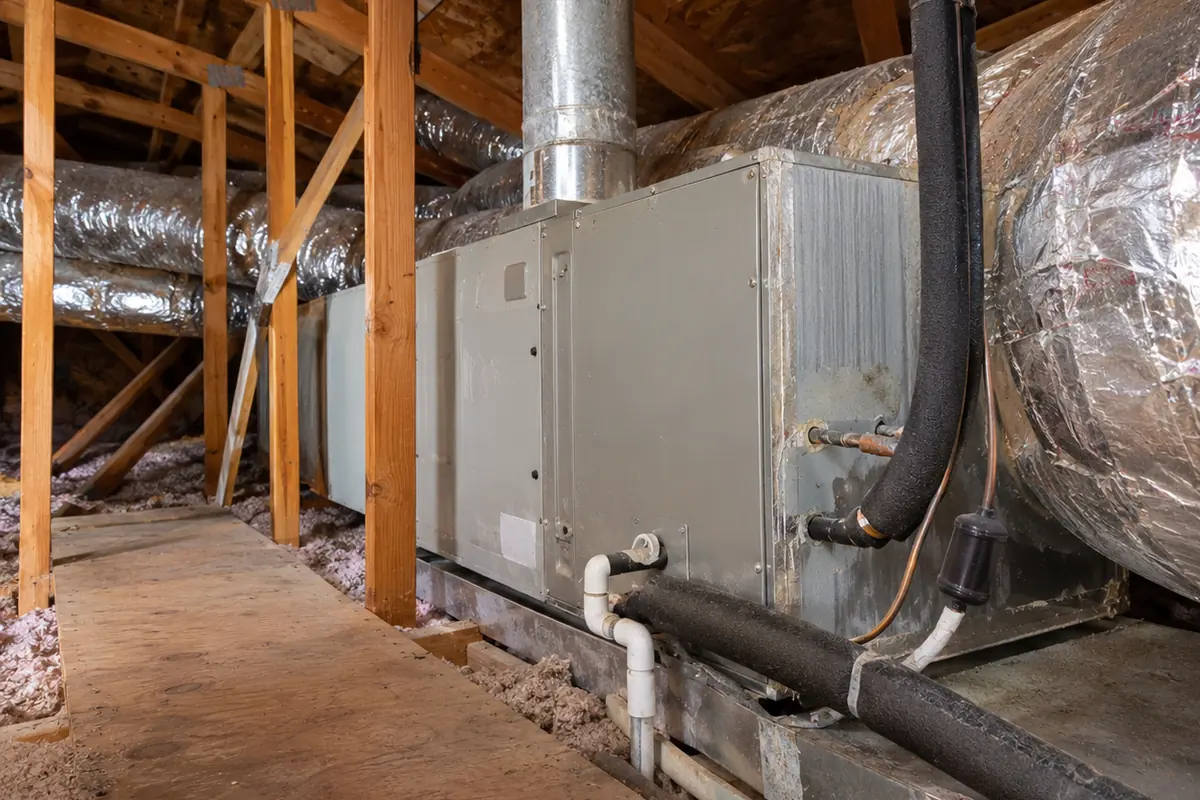
Systems that cool and heat alike are covered by heat pump repair and installation in Garland, TX. A defrost cycle runs in cold, damp weather, and when the heat pump cannot keep up, emergency heat takes over; the reversing valve, defrost board and sensors have to work together for that to go right. Describe what the system is doing through Call Now and an independent HVAC contractor serving 9 ZIP codes around Garland will answer.
How a heat pump works
A heat pump moves heat instead of making it. In cooling mode it works like an air conditioner. In heating mode a reversing valve flips the refrigerant flow so the outdoor coil absorbs heat from outside air and the indoor coil releases it. Electric resistance heat strips act as backup, often called auxiliary or emergency heat.
Defrost cycles and when to worry
In cold, damp weather ice forms on the outdoor coil. The system briefly runs in reverse to melt it, and you may see steam rise from the unit and a fan stop. That is normal. The system should return to heating within several minutes. Call for service if the coil stays covered in ice, the unit runs defrost constantly or the house gets cold.
Emergency heat vs auxiliary heat
- Strips use much more electricity, so use emergency heat only when the outdoor unit is not working
- A system that uses strips all the time may have a fault
- Emergency heat is a manual setting that turns the heat pump off and uses only the electric strips
- Auxiliary heat runs automatically with the heat pump on very cold days or when the thermostat setting is far above the temperature
Choosing a heat pump
Compare HSPF2, the cold-weather performance rating, the size from a Manual J calculation and the backup heat on offer. Cold-climate and variable-speed heat pumps hold their efficiency at lower temperatures. Also ask about thermostat compatibility and permits.
Common heat pump faults
- Defrost control board or sensor failure
- Low refrigerant charge from a leak
- Thermostat wiring or setting problems
- Failed reversing valve, so the system will not switch modes
- Dirty or iced outdoor coil and failed fan motor
How a heat pump repair and installation visit works, step by step
Technicians who follow the same steps in the same order find the actual cause, not just the symptom. Knowing those steps lets you distinguish a thorough diagnostic visit from a part swap.
- Interview: what you noticed, when it started, how the system sounds and what you have already tried.
- Visual check: thermostat settings, filter, supply and return registers, the air handler, the condensate line and the outdoor unit.
- Electrical tests: breaker and disconnect, capacitor microfarad rating, contactor contacts, motor amperage and control voltage.
- Airflow and temperature: the temperature drop across the evaporator coil and, where needed, static pressure in the ductwork.
- Refrigerant checks: pressures, superheat and subcooling, and a leak search if the charge is low.
- A written finding: the cause, the repair options and what each one would fix, before any part is replaced.
Questions to ask before approving a repair
- What failed, how did you confirm it and can you show me the part or the reading?
- What are my options: repair now, repair and monitor, or replace?
- Will you give me the findings and the scope in writing before work starts?
- How old is the system and which refrigerant does it use?
- Is this the cause or a symptom of something else, such as low airflow or a leak?
Prepare your Garland home before the technician arrives
- Check that the outdoor disconnect and the breaker are on, but do not open electrical panels
- Replace or check the filter, and clear furniture from the return grille and the air handler
- Set the thermostat to cool and note what it shows and what the house temperature is
- Clear weeds, leaves and debris from around the outdoor unit
- Write down the sounds, smells, leaks or ice you have noticed, and when
Mistakes that make AC problems worse
- Ignoring a dirty filter. It is the most common cause of poor airflow and frozen coils.
- Running a frozen system. Ice means airflow or refrigerant is wrong, and running it can damage the compressor.
- Putting off a small repair. A weak capacitor can take out a compressor if left alone.
- Setting the thermostat much lower to cool faster. An AC cools at a steady rate, so it only runs longer.
- Adding refrigerant without finding the leak. The charge will drop again and the leak may grow.
Safety and rules to know
Three hazards share one machine in an air conditioner: high-voltage electricity, pressurized refrigerant and moving parts. Opening electrical panels, bridging contactors and adding refrigerant are not jobs for homeowners, and capacitors can keep a charge after the power is off.
Certification under EPA Section 608 is required in the United States for anyone buying or handling refrigerant, which must be recovered instead of vented. Request the technician's certification and confirm the contractor's licence through Texas Department of Licensing and Regulation (A/C contractor license).
What makes heat pump repair and installation different in Garland
Dallas County suburb of roughly 250,000 east of Dallas, next to Lake Ray Hubbard and Rowlett. Summers regularly reach the upper 90s and 100s, so AC runs almost continuously from June to September.
Housing from the 1960s to the 1980s often has attic ductwork and older systems, including R-22 era equipment. Clay soil can shift and tilt condenser pads. The diagnosis and the equipment recommendation for your address can both be shaped by these local conditions, so ask the technician how.
Heat pump repair and installation across Garland and nearby cities
Air Conditioning Repair Garland covers 9 ZIP codes in Garland, Texas: 75040, 75041, 75042, 75043, 75044, 75045, 75046, 75047, 75049. Calls and requests also reach providers serving Rowlett, Sachse, Richardson, Plano and Wylie. Coverage is confirmed address by address, so give your ZIP code when you call.
Use Call Now at the top of the page, say what the system is doing and how old it is, and you will be connected with an independent HVAC contractor who confirms your address and diagnoses the system in person.
Related help in Garland
If this is not quite your situation, these pages cover the neighboring questions: Thermostat Installation; AC Installation; AC Not Cooling; AC Repair or Replace? A Decision Guide for Garland. The service area list shows every nearby city and ZIP code covered.
Heat Pump Repair and Installation in Garland: common questions
Why is my heat pump blowing cold air?
Possible causes include a defrost cycle, insufficient heat, low refrigerant and a failed reversing valve; a diagnostic visit establishes which of them it is.
Is steam from the outdoor unit normal?
Yes during defrost, but it should stop within a few minutes.
Should I maintain a heat pump twice a year?
Yes, one visit in spring for cooling and one in fall for heating.
Do heat pumps work in cold weather?
Heat pumps built today do well in mild to cool climates, cold-climate models handle lower temperatures, and backup heat is usually included.
How long do heat pumps last?
Ten to fifteen years is common when it is maintained.
What is emergency heat?
Emergency heat is a manual setting where electric strips take over from the heat pump; it uses a great deal of electricity, so keep it temporary.